
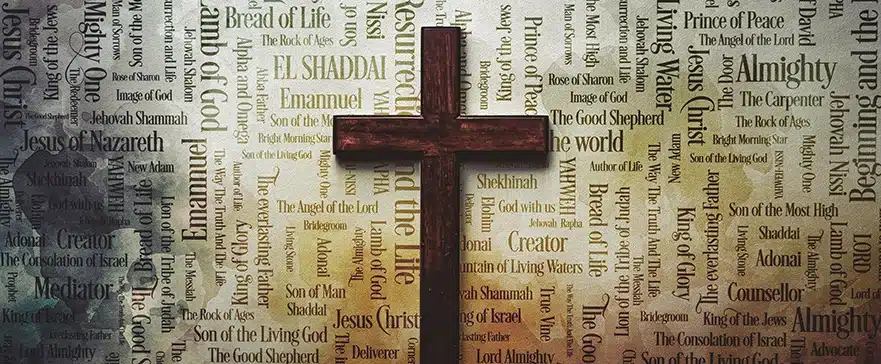


In Hebrew, names carry meanings that reveal identity and purpose. Throughout the Bible, names often reflect a person’s calling in God’s plan. Abraham means “father of many,” pointing to God’s promise that he would become the father of many nations (Genesis 17:4–6); Moses means “drawn out,” reflecting his rescue from the waters and his role in leading Israel out of Egypt (Exodus 2:10); and Hannah means “grace” or “favor,” echoing God’s kindness shown to her after years of prayer (1 Samuel 1). This pattern reflects God’s own example, as He revealed Himself through His name and titles to help humanity understand who He is. Let’s explore some of His most significant designations.
Yahweh: The Self-Existing God (used about 6,828 times in the Hebrew Bible)
The name Yahweh is God’s personal, unique name, while others represent His titles. Titles describe God’s roles and attributes, but Yahweh reveals His identity as the eternal, self-existing God. Everything expressed in His other titles is already contained within this name. Because the name is so personal and holy, Jewish tradition does not pronounce it aloud, using Adonai (Lord) instead.
By revealing His name, God showed that He desires to be known personally, inviting relationship and confidence in His character.
God first revealed the name Yahweh to Moses at the burning bush (Exodus 3:14–15), just before Israel’s deliverance from slavery, showing that He is not distant but is actively faithful in history. Derived from the Hebrew hayah (to be), Yahweh means “I AM WHO I AM,” declaring God as the One who depends on nothing and keeps His promises. In the New Testament, Jesus deepened this revelation by using the same “I AM” language (John 8:58), identifying Himself with the God of the burning bush. By revealing His name, God showed that He desires to be known personally, inviting relationship and confidence in His character.
Elohim: God the Powerful Creator (more than 2,500 times)
Elohim is the first title for God in the Bible, appearing at the opening of Genesis. As a plural form of El (God), it emphasizes God’s majesty and unlimited power. Elohim created the world out of nothing; everything exists because He spoke it into being. This marks the beginning of humanity’s story and the foundation of all existence, as all creation depends on God the Creator.
Every search for meaning ultimately begins with Elohim, the One who made all things. The New Testament confirms this truth by declaring that all things were created through Christ and for Him (Colossians 1:16), showing that the creative power of Elohim is fully present in Christ.
El Shaddai: God Almighty (about 48 times)
In recent years, the ancient title El Shaddai became widely known through Amy Grant’s worship song “El Shaddai.” While the song introduced this title to many, the beauty and depth of this designation come from what it exhibits about God’s character. The title El Shaddai is first used in Genesis 17:1 when God revealed Himself to Abraham and said, “I am Almighty God [El Shaddai]; walk before Me and be blameless.” At that moment, Abraham was old, Sarah was barren, and God’s promise of a son seemed humanly impossible. By revealing Himself with the title El Shaddai, God showed that the fulfillment of His covenant did not depend on human strength, but on His all-sufficient power. Through this account, El Shaddai reveals a God who brings life where there is none and remains faithful to His promises, no matter the obstacles.
As believers, we can find comfort in knowing that despite our weakness, we serve the same God who sustained Abraham. The character of El Shaddai is seen clearly in 2 Corinthians 12:9: “My grace is sufficient for you, for My strength is made perfect in weakness.” Sometimes we need to find ourselves in a place of extreme weakness to experience God’s greatness.
Adonai: The Lord and Master (about 439 times)
Adonai means “Lord” or “Master,” expressing authority within a living relationship rather than merely a distant power. The name first appears in Genesis 15:2, when Abraham (then called Abram) said, “O Lord God [Adonai, YHWH], what will You give me, seeing I go childless?” This moment reveals the heart of the relationship: Abraham submitted to God’s authority while approaching Him with honesty and intimacy.
For believers today, calling God Adonai is a confession that we are not our own, but rather we live under the good rule of a sovereign, faithful, and near Master.
Throughout the Hebrew Bible, Adonai is used in prayer and surrender, showing that God’s rule is covenantal and faithful, not oppressive. This relationship continues in the New Testament through the Greek word Kyrios (Lord), which Jesus affirmed when He asked, “Why do you call Me ‘Lord, Lord,’ and not do the things which I say?” (Luke 6:46). Lordship therefore involves both allegiance and obedience. For believers today, calling God Adonai is a confession that we are not our own, but rather we live under the good rule of a sovereign, faithful, and near Master.
El Elyon: God Most High (about 28 times)
El Elyon means “God Most High,” declaring that God stands above all rulers, nations, and powers, with no authority comparable to Him. The title first appears in Genesis 14:18–20, when Melchizedek, king of Salem and priest of God Most High, blessed Abraham after his victory, emphasizing that God is the supreme ruler and possessor of heaven and Earth and that Abraham’s success came from God’s sovereignty rather than human strength.
This assurance that God reigns over history continues into the New Testament, where Christ is revealed as fully sharing in this supreme authority. Jesus is exalted above every power (Ephesians 1:21), and God highly exalted Him and gave Him the name above every name so that every knee should bow to Him (Philippians 2:9–11). In this way, Christ is the visible revelation of El Elyon, the God Most High reigning over all creation.
Why Do These Names Matter?
God has one personal name—Yahweh—and many titles that reveal different aspects of who He is. Yahweh identifies Him as the eternal, self-existing “I AM,” the faithful God who keeps His promises and makes Himself known. The titles help us understand how Yahweh acts and relates to the world: Elohim reveals Yahweh as the powerful Creator of all things; El Shaddai shows Him as the all-sufficient Almighty who works through human weakness; Adonai presents Yahweh as Lord and Master, calling for trust and obedience; and El Elyon proclaims Yahweh as the Most High, supreme over all nations and powers.
Together, these titles deepen our understanding of the one true God, Yahweh, who creates, sustains, rules, saves, and invites us into a relationship with Him.
Photo Credit: Adobe Stock
About the Author